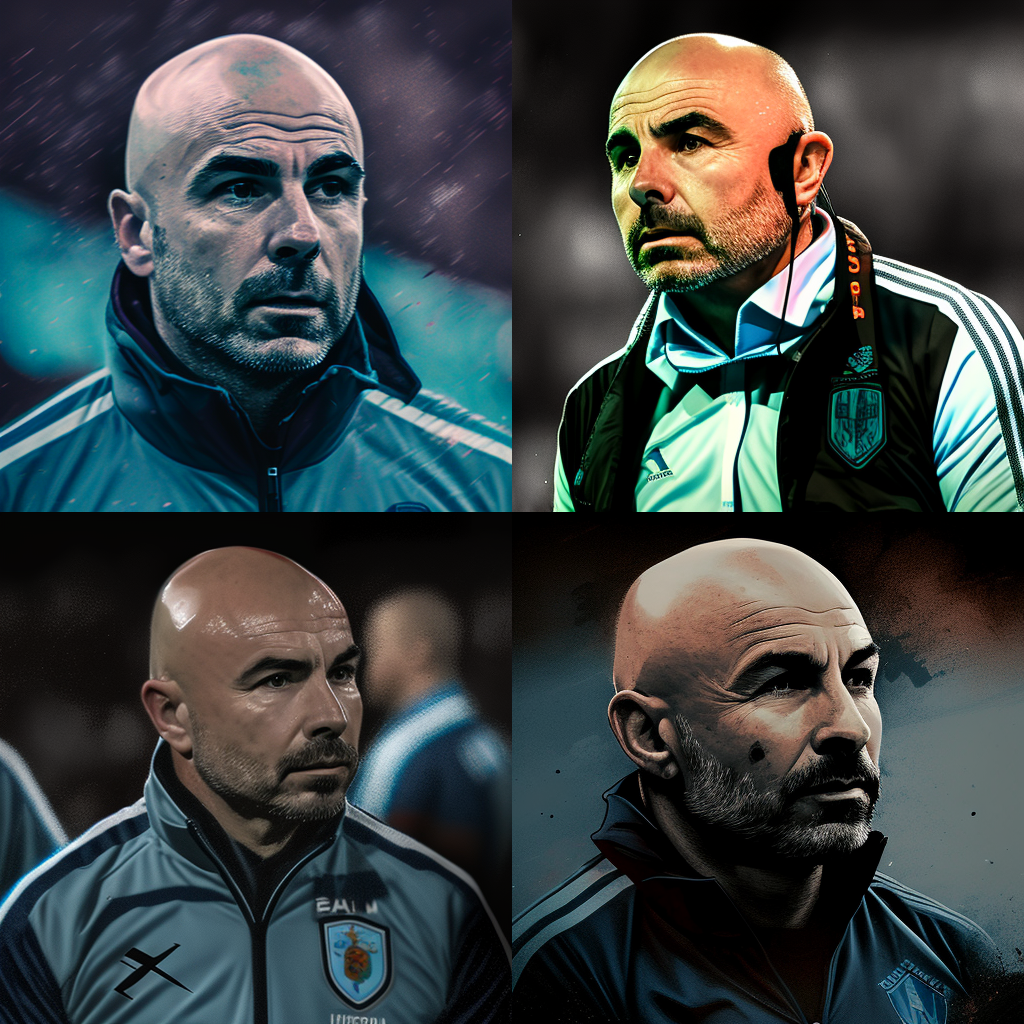
Pep Guardiola’s Coaching Style: A Deep Dive into the Secrets of his Success

Pep Guardiola is one of the most successful football coaches of all time, having won numerous trophies with Barcelona, Bayern Munich, and Manchester City. His unique coaching style has revolutionized the game, and many coaches and players around the world have been inspired by his methods.

In this blog post, we will take a deep dive into Pep Guardiola’s coaching style, and explore what makes him such a successful coach.

  1. Possession-based Football

Pep Guardiola’s style of football is built around possession. He believes that if his team has the ball, then the opposition cannot score. His teams play a high-tempo passing game, which is focused on keeping the ball and dominating possession.

Guardiola’s teams are always looking for the open spaces on the pitch, and they constantly move the ball around to create passing opportunities. He wants his players to be comfortable on the ball, and to be able to play quick, accurate passes to break down the opposition.

  1. High Pressing

Guardiola’s teams are also known for their high pressing. They work hard to win the ball back quickly, and to prevent the opposition from playing out from the back.

Guardiola’s teams press in packs, with players moving in unison to close down space and win the ball back. This high-intensity pressing requires a lot of fitness and discipline from the players, but it can be incredibly effective when executed correctly.

  1. Tactical Flexibility

One of the things that sets Guardiola apart from other coaches is his tactical flexibility. He is always looking for new ways to exploit the weaknesses of the opposition, and he is not afraid to change his tactics mid-game if necessary.

Guardiola’s teams are known for their fluidity and adaptability, with players switching positions and formations depending on the situation. This requires a lot of tactical intelligence and flexibility from the players, but it can be incredibly effective in disrupting the opposition’s game plan.

  1. Attention to Detail

Guardiola is also known for his meticulous attention to detail. He spends countless hours studying the opposition, analyzing their strengths and weaknesses, and devising tactics to exploit them.

Guardiola is a master of set pieces, and his teams are always well-drilled in free kicks, corners, and penalties. He also pays close attention to his players’ diets, fitness levels, and recovery times, ensuring that they are always in the best possible condition.

  1. Player Development

Finally, Guardiola is a coach who is committed to developing his players. He believes in the importance of youth development, and he has a track record of bringing through young players and giving them opportunities to shine.

Guardiola is also known for his ability to improve his players’ technical and tactical abilities. He spends a lot of time on the training ground, working with his players to improve their passing, movement, and decision-making.

Conclusion

Pep Guardiola’s coaching style is built around possession, high pressing, tactical flexibility, attention to detail, and player development. His teams are known for their fluidity, adaptability, and high-intensity play.

If you are a coach or a player looking to improve your performance in the game, then there is a lot that you can learn from Pep Guardiola’s methods. Whether you want to develop your passing, improve your fitness, or become more tactically astute, there are many books and ebooks available that can help you to achieve your goals.

So if you want to take your game to the next level, then be sure to check out some of the books and ebooks available on coaching and player development. With the right guidance and a lot of hard work, you can become a better player and coach, and achieve great success on the football pitch.


The Rich Culture of Soccer in Asia: A Celebration of National Pride and Identity

Soccer, also known as football, is one of the most popular sports in the world, and Asia is no exception. Soccer has a rich history and culture in Asia, and it has become a significant part of the region’s identity. In this blog post, we will explore the culture of soccer in Asia.

The History of Soccer in Asia

Soccer first arrived in Asia during the late 1800s and early 1900s when European colonizers introduced the sport to the region. The first official soccer club in Asia was established in India in 1889, and the first inter-colonial match took place in Shanghai, China, in 1892. Over the years, soccer gained popularity in Asia, and by the 1950s, the sport had become a significant part of the region’s culture.

Today, Asia is home to some of the most passionate soccer fans in the world, and the region has produced some of the sport’s greatest players, including Hidetoshi Nakata (Japan), Park Ji-sung (South Korea), and Ali Daei (Iran).

The Culture of Soccer in Asia

Soccer has a unique culture in Asia, with each country having its own traditions and ways of celebrating the sport. For example, in Japan, soccer is known as “sakka,” and it is considered a symbol of teamwork, perseverance, and discipline. Japanese soccer fans are known for their passionate support of their national team, and they are famous for their choreographed chants and synchronized flag-waving.

In South Korea, soccer is a significant part of the country’s identity and is celebrated as a symbol of national pride. South Korean soccer fans are known for their enthusiastic support of their national team, and they are famous for their loud and synchronized cheers and chants.

In Iran, soccer is considered the most popular sport in the country, and it is a way for Iranians to express their national pride and identity. Iranian soccer fans are known for their passionate support of their national team, and they are famous for their colorful banners and flags.

The Impact of Soccer in Asia

Soccer has had a significant impact on Asia, both culturally and economically. The sport has brought people together, united communities, and fostered a sense of national pride and identity. Soccer has also contributed to the region’s economic growth, with the sport generating billions of dollars in revenue each year.

Furthermore, soccer has helped to promote gender equality in Asia, with the sport providing opportunities for women to participate and excel in a traditionally male-dominated field. The success of women’s soccer teams in countries such as Japan, China, and South Korea has inspired a new generation of female athletes and helped to break down gender stereotypes.

Conclusion

Soccer has a rich history and culture in Asia, and the sport has become a significant part of the region’s identity. The passion and enthusiasm of Asian soccer fans are unmatched, and the sport has brought people together, united communities, and fostered a sense of national pride and identity. With the continued growth and success of soccer in Asia, the sport’s impact on the region is sure to continue for generations to come.

7 Steps to Becoming a Respected Soccer Coach: How to Improve Performance and Foster Team Success

Soccer, also known as football, is one of the most popular sports in the world, with millions of players and fans worldwide. For a soccer coach, it is important not only to have a deep understanding of the game but also to possess excellent leadership and communication skills. In this blog post, we will discuss how to be a respected soccer coach, and how to help players improve their performance.

  1. Develop a strong knowledge of the game

The first step to becoming a respected soccer coach is to have a deep understanding of the game. This includes knowledge of tactics, formations, player positions, and the rules of the game. It is important to keep up with the latest trends and innovations in the sport, and to be able to apply this knowledge in your coaching sessions.

  1. Build strong relationships with your players

Good communication is essential for any coach, and building strong relationships with your players is key. Get to know your players on a personal level, and understand their individual strengths and weaknesses. This will help you tailor your coaching to each player’s needs, and will also help build trust and respect between you and your players.

  1. Focus on teamwork and collaboration

Soccer is a team sport, and a good coach knows how to build a cohesive team that works together towards a common goal. Encourage your players to support each other, communicate effectively on the field, and work towards shared objectives. This will not only improve their performance but also foster a positive team dynamic.

  1. Set clear expectations and goals

As a coach, it is important to set clear expectations and goals for your players. This includes not only performance-related goals but also expectations around behavior and attitude. Communicate your expectations clearly, and ensure that your players understand what is expected of them.

  1. Provide constructive feedback

Feedback is an essential part of the coaching process, but it is important to provide feedback in a constructive and positive manner. When providing feedback, focus on specific areas for improvement, and offer suggestions for how to improve. Always provide feedback in a way that is supportive and encouraging.

  1. Encourage a growth mindset

A growth mindset is essential for any athlete looking to improve their performance. As a coach, it is your role to encourage this mindset in your players. Encourage your players to view mistakes as opportunities for growth, and to focus on continuous improvement. Celebrate successes, but also encourage your players to learn from their failures.

  1. Lead by example

Finally, as a coach, it is important to lead by example. This means modeling the behavior and attitudes that you want to see in your players. Be positive, enthusiastic, and passionate about the game, and always strive to improve your own knowledge and skills.

In conclusion, becoming a respected soccer coach requires a deep understanding of the game, strong communication and leadership skills, and a commitment to helping your players improve their performance. By focusing on teamwork, setting clear expectations, providing constructive feedback, and encouraging a growth mindset, you can help your players reach their full potential.

If you’re looking for resources to help you improve your coaching skills or to help your players improve their performance, be sure to check out my books and ebooks. With practical tips, expert advice, and real-world examples, these resources are designed to help coaches at all levels improve their coaching skills and help their players achieve success on the field.

Analyzing Opponents: Strategies for Scouting and Preparing for Your Next Game

As a soccer coach, one of your most important responsibilities is preparing your team for their upcoming opponents. Scouting your opponents, studying their strengths and weaknesses, and developing strategies to exploit them is essential for success on the field. In this blog post, we’ll provide some tips and strategies for effective opponent analysis and preparation.

  1. Start Early

The earlier you can start scouting your opponents, the better. As soon as you know who you’ll be playing next, begin gathering as much information as possible. This might include watching game footage, reading match reports, or talking to other coaches who have played against them before. The more time you have to analyze and prepare, the more effective your game plan will be.

  1. Focus on Key Players

Every team has its star players – those who are responsible for most of the goals, assists, or other important contributions. Identify these players early on and focus your scouting efforts on them. Watch game footage specifically to see how they perform, and look for weaknesses in their play that you can exploit.

  1. Look for Patterns

As you watch your opponents’ game footage, look for patterns in their play. Do they tend to attack down one particular side of the field? Do they play more aggressively in the first half? Identifying these patterns can help you develop a game plan that anticipates and counters their tactics.

  1. Consider Formations and Strategies

Another important aspect of scouting is understanding your opponents’ formations and strategies. Study their past games to see what formation they typically use, and consider how you can adjust your own formation to counter their strengths. Additionally, look for specific strategies they use, such as high-pressing or counter-attacking, and prepare accordingly.

  1. Communicate with Your Players

Once you’ve gathered all the information you need, it’s time to communicate it to your players. Make sure they understand the key players and patterns you’ve identified, and provide them with specific strategies and tactics to use on the field. Consider holding team meetings or individual player meetings to discuss the game plan and make sure everyone is on the same page.

  1. Adjust as Necessary

Finally, remember that opponent analysis and preparation is an ongoing process. Keep monitoring your opponents’ performances leading up to the game, and be prepared to adjust your game plan as necessary. Injuries, player absences, or other unforeseen circumstances can all impact your opponents’ performance, so stay flexible and adaptable.

In conclusion, effective opponent analysis and preparation is essential for success on the soccer field. By starting early, focusing on key players, identifying patterns, understanding formations and strategies, communicating with your players, and remaining adaptable, you can develop a game plan that gives your team the best chance of success. And if you’re looking for more tips and strategies to help improve your coaching or playing performance, be sure to check out my books and ebooks.

Mastering the Midfield: How to Be a Good Midfielder and Playmaker in Soccer

Soccer is a team sport, and the midfield is the heart of the team. As a midfielder, you are responsible for controlling the game and dictating the pace of play. Being a good midfielder is not just about running a lot or being physically strong, but also about having the right skills, tactics, and mindset. In this blog post, we will discuss how to be a good midfielder and how to be a playmaker in soccer.

  1. Be a Versatile Player

To be a good midfielder, you need to be versatile. You should be comfortable playing in different positions and have a good understanding of the game. You should be able to defend, attack, and control the midfield. You should also be able to play short and long passes, dribble the ball, and shoot accurately. This versatility will help you adapt to different game situations and make you a valuable asset to your team.

  1. Communicate Effectively

Communication is key in soccer, especially in the midfield. As a midfielder, you need to be able to communicate with your teammates effectively. You should be able to give clear instructions, call for the ball, and provide feedback to your teammates. This will help you create a cohesive team that can work together to achieve its goals.

  1. Control the Game

The midfield is where the game is won or lost. To be a good midfielder, you need to be able to control the game. You should be able to read the game and anticipate the movements of your opponents. You should also be able to control the tempo of the game by slowing it down or speeding it up. This will help you create scoring opportunities for your team and prevent your opponents from doing the same.

  1. Play Make

A playmaker is a midfielder who can create scoring opportunities for their team. To be a playmaker, you need to have good vision and passing ability. You should be able to see the gaps in the defense and make accurate passes to your teammates. You should also be able to create space for yourself and your teammates by dribbling the ball effectively.

  1. Defend and Attack

As a midfielder, you need to be able to defend and attack. You should be able to help your defenders when your team is under pressure, and also be able to join the attack when your team is in possession of the ball. This requires good positioning, tackling ability, and the ability to transition quickly from defense to attack.

  1. Work Hard and Stay Positive

Being a midfielder is not an easy job, and it requires hard work and a positive mindset. You should be willing to put in the extra effort to improve your skills and help your team. You should also be able to stay positive even when things are not going well. This will help you maintain your focus and motivate your teammates to do the same.

In conclusion, being a good midfielder and playmaker in soccer requires a combination of skills, tactics, and mindset. You need to be versatile, communicate effectively, control the game, play make, defend and attack, and work hard and stay positive. If you can master these qualities, you will become a valuable asset to your team and help them achieve their goals.

Carlo Ancelotti and the Brazilian National Team: A Winning Combination?

The possibility of Carlo Ancelotti taking over as head coach of the Brazilian national team has been making headlines recently. Ancelotti is widely regarded as one of the best managers in the game and has enjoyed success at some of the biggest clubs in Europe. In this blog post, we will explore what would happen if Ancelotti signed with the Brazilian national team.

The Brazilian national team is one of the most successful teams in football history, having won the World Cup a record five times. However, in recent years, the team has struggled to replicate the success of the past. The team is currently in a transitional phase, with a new generation of players emerging.

If Ancelotti were to take over as head coach, he would bring a wealth of experience and a winning mentality to the team. Ancelotti has won the Champions League three times as a manager and has also won league titles in Italy, England, Spain, and France. He knows what it takes to win at the highest level and would be a valuable asset to the Brazilian national team.

One of Ancelotti’s strengths is his ability to adapt to different teams and situations. He is known for his tactical flexibility and would be able to work with the players at his disposal to develop a winning strategy. The Brazilian national team has a wealth of talent at its disposal, and Ancelotti would be able to get the best out of them.

Ancelotti’s experience in managing some of the biggest clubs in Europe would also be valuable in developing a winning culture within the Brazilian national team. He would bring a sense of professionalism and attention to detail that would help the team compete at the highest level.

Another benefit of Ancelotti taking over as head coach of the Brazilian national team would be his ability to develop young players. He has a track record of working with young talent and developing them into top-level players. This would be invaluable for a team in transition, as the Brazilian national team currently is.

In conclusion, if Carlo Ancelotti were to sign with the Brazilian national team, it would be a significant boost to the team’s chances of success. His experience, tactical flexibility, and ability to develop young players would be invaluable assets to a team in transition. It remains to be seen whether Ancelotti will take the job, but if he does, it could be the start of a new era of success for the Brazilian national team.

Jorge Sampaoli’s Dynamic Playstyle: High Pressing, Attacking Movement, and Tactical Flexibility

Jorge Sampaoli, the Argentine coach, is known for his unique and dynamic style of play. His philosophy revolves around high-pressing, fluid movement, and an attacking mindset that aims to dominate possession and create goal-scoring opportunities. In this blog post, we will explore Jorge Sampaoli’s playstyle and how it has evolved over the years.

Sampaoli’s early coaching career was marked by his association with Marcelo Bielsa, another Argentine coach renowned for his attacking style of play. Sampaoli’s teams also share similarities with Bielsa’s teams in terms of their high-pressing, intense attacking, and fluid movement. Sampaoli’s approach, however, is more focused on tactical flexibility and situational adaptation than Bielsa’s.

One of the key elements of Sampaoli’s playstyle is his use of a high defensive line. This allows his team to press high up the pitch and force turnovers in the opposition’s half. The high press also helps his team regain possession quickly and launch counter-attacks. The downside of this approach is that it requires the defenders to be alert, quick, and have excellent positional awareness. If the defenders make a mistake, the opposition can easily exploit the space left behind.

Another important aspect of Sampaoli’s playstyle is his emphasis on attacking movement. Sampaoli believes that the players should be constantly moving and interchanging positions to create space and confusion in the opposition’s defense. This style of play requires technically proficient players who can pass and move quickly and effectively. Sampaoli’s teams often play with a false nine or a striker who drops deep to link up with midfielders, creating numerical superiority in the midfield.

Sampaoli’s approach to possession is also unique. He doesn’t believe in dominating possession for the sake of it. Instead, he aims to use possession as a means to create scoring opportunities. His teams often play with a directness that seeks to bypass the midfield and create goal-scoring opportunities quickly. This style of play requires the players to be confident in their passing ability and aware of their surroundings.

Sampaoli’s tactical flexibility is also noteworthy. He is not afraid to change formations mid-game or switch up his tactics depending on the opposition’s strengths and weaknesses. This adaptability allows his team to exploit the opposition’s weaknesses and nullify their strengths.

In conclusion, Jorge Sampaoli’s playstyle is characterized by high-pressing, attacking movement, and tactical flexibility. His approach emphasizes possession as a means to create scoring opportunities and requires technically proficient players who can pass and move quickly. Sampaoli’s approach has been successful at the club and international level, and he continues to evolve his style of play as he takes on new challenges.

The Ultimate Guide to Becoming a Better Defender in Soccer (SBM)

Defending is an essential aspect of soccer. A good defender can make all the difference in a game, and even a team’s season. However, becoming a better defender takes more than just natural talent. It takes dedication, practice, and a willingness to learn. In this post, we’ll cover some essential tips on how to become a better defender in soccer.

  1. Master the basics: Defending is about more than just tackling. You also need to master other basics such as positioning, marking, and communication. Make sure you understand the basics of defending, and practice them consistently.
  2. Improve your physical fitness: Defending can be a physically demanding role, so it’s essential to work on your fitness. Focus on building your strength, speed, and endurance. Incorporate regular cardio and strength training exercises into your routine.
  3. Analyze your opponents: One of the most critical aspects of defending is understanding your opponents. Take the time to study your opponents’ tendencies, strengths, and weaknesses. This will help you anticipate their moves and make better decisions on the field.
  4. Improve your footwork: Good footwork is essential for defenders. Work on your agility, balance, and coordination to improve your footwork. This will help you stay on your toes and react quickly to changing situations on the field.
  5. Communicate effectively: Communication is key in soccer, especially for defenders. Make sure you’re communicating effectively with your teammates, both on and off the field. This will help you work together as a team and prevent confusion and mistakes.

By following these tips, you can become a better defender in soccer. Remember, becoming a good defender takes time and practice. Keep working on your skills, and you’ll see improvement over time. And if you want to learn more about soccer and improve your game further, check out our books and ebooks.

For more soccer tips and insights, check out our books and ebooks here on Soccer Big Minds. They’re packed with valuable information that will help you take your game to the next level.

The Importance of Tactical Discipline in Soccer: Why It Matters and How to Improve It

Soccer, also known as football in many parts of the world, is a beautiful game that requires a lot of tactical discipline. Tactical discipline in soccer is the ability of players to follow a specific set of instructions, strategies, and tactics during a game. It is an essential element of the game and is what sets the great teams apart from the average ones.

Tactical discipline involves many different elements, including player positioning, movement, and decision-making. Players need to understand their roles and responsibilities on the pitch, and they must be able to execute the coach’s game plan. When a team lacks tactical discipline, they become disorganized, make poor decisions, and struggle to maintain possession and control of the game.

One of the key elements of tactical discipline in soccer is player positioning. Players need to be in the right positions on the pitch to be effective. For example, defenders need to be positioned in a way that allows them to prevent the opposition from scoring, while attackers need to be positioned in a way that allows them to create scoring opportunities. If players are not in the right positions, the team will struggle to maintain control of the game.

Another important aspect of tactical discipline is movement. Players need to move around the pitch in a coordinated and efficient manner. This means making runs into space, tracking back to defend, and supporting their teammates when they have possession of the ball. Movement is key to creating scoring opportunities and preventing the opposition from doing the same.

Decision-making is also crucial to tactical discipline. Players need to make the right decisions on the pitch to be effective. This means knowing when to pass, when to shoot, and when to hold onto the ball. Players also need to be able to read the game and adjust their play accordingly. If players make poor decisions, the team will struggle to maintain control of the game.

Tactical discipline is not just important during the game itself. It is also essential during training sessions. Players need to understand their roles and responsibilities, and they need to practice executing the coach’s game plan. This means drilling specific tactics and strategies, so that players are able to execute them automatically during the game.

In conclusion, tactical discipline is an essential element of soccer. It involves player positioning, movement, and decision-making, and is crucial to maintaining control of the game. Without tactical discipline, teams become disorganized and struggle to maintain possession and control. As such, it is important for coaches to emphasize tactical discipline during training sessions and for players to understand their roles and responsibilities on the pitch.

If you’re interested in learning more about soccer and improving your skills as a coach or player, I recommend checking out my books and ebooks on the subject. They cover a wide range of topics, from tactics and strategy to player development and training techniques. Whether you’re a beginner or an experienced coach or player, my books and ebooks can help you take your game to the next level.

Decoding Massimiliano Allegri’s Winning Soccer Coaching Philosophy

Massimiliano Allegri is one of the most successful football coaches in modern history. The Italian coach has won numerous domestic titles with different teams and is known for his tactical versatility and ability to adapt to different playing styles. His coaching philosophy is based on a combination of tactical flexibility, disciplined defending, and attacking flair.

Allegri began his coaching career with smaller Italian clubs like Aglianese and Grosseto before moving on to manage Serie A teams such as Cagliari, AC Milan, and Juventus. During his time at these clubs, Allegri developed a reputation for his tactical acumen and ability to get the best out of his players.

One of the key elements of Allegri’s coaching philosophy is his emphasis on tactical flexibility. He is known for his ability to adapt his tactics to suit the strengths of his team and the weaknesses of his opponents. This is evidenced by his success with AC Milan, where he won the Serie A title in 2010-11 playing a fluid 4-3-3 formation, before switching to a more conservative 4-4-2 system the following season to defend their title.

Allegri’s teams are also known for their disciplined defending. He places a great emphasis on defensive organization and his teams are notoriously difficult to break down. This is evident in his time at Juventus, where he led the team to five consecutive Serie A titles between 2014 and 2019, with the team conceding an average of just 20 goals per season during that time.

Despite his focus on defensive solidity, Allegri’s teams are also renowned for their attacking flair. He encourages his players to take risks in the final third and create scoring opportunities through creative play. This is reflected in the high-scoring nature of his teams, particularly during his time at AC Milan where they scored over 60 goals in each of his three seasons in charge.

Allegri’s coaching philosophy is also characterized by his man-management skills. He is known for his ability to create a positive team culture and get the best out of his players. This was evident during his time at Juventus, where he was able to motivate and inspire a team of experienced professionals to achieve domestic success year after year.

In conclusion, Massimiliano Allegri’s coaching philosophy is built on tactical flexibility, disciplined defending, attacking flair, and man-management skills. His success with a variety of teams in different contexts demonstrates the effectiveness of this approach. For soccer coaches and players looking to develop their own skills and knowledge, there are a wealth of resources available, including books and eBooks. Check out my books and eBooks on soccer coaching and player development to learn more about the game and how to improve your own performance.

Design a site like this with WordPress.com
Get started